Drip Edge: The Tiny Metal Strip That Protects Your Roof Edge
The most overlooked piece of metal on your roof
Look at the very edge of your roof, right where the shingles stop. Tucked underneath them there should be a thin strip of bent metal. That is drip edge, and it does a surprisingly big job for something you can barely see.
What drip edge does
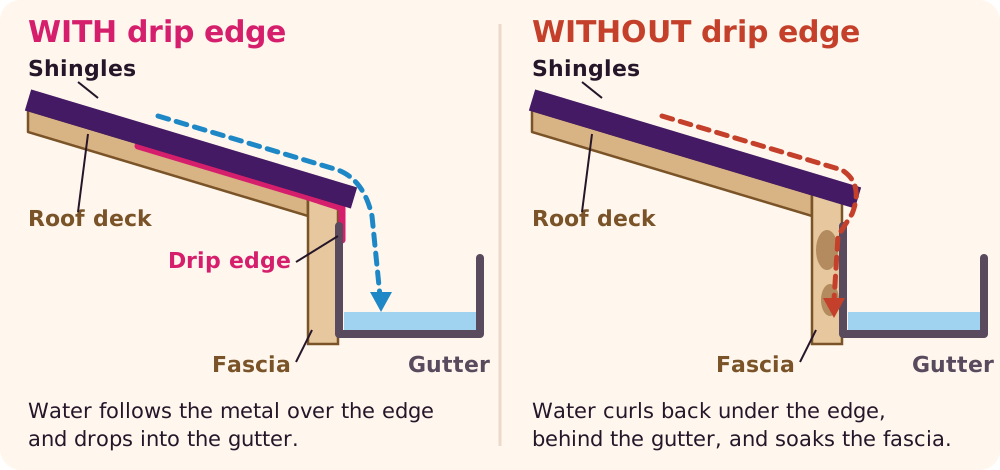
Shingles shed water, but at the edge of the roof that water has to make a leap. Without help, it can curl back under the shingles by surface tension and run down the fascia board, the board your gutter hangs on. Drip edge gives the water a clean path to follow:
- It guides water off the roof and into the gutter, not behind it
- It protects the roof deck and fascia from soaking, rot and early failure
- It props up the edge of the shingles so they are less likely to sag or cup
- It adds a tidy, finished edge that helps keep out wind-driven rain
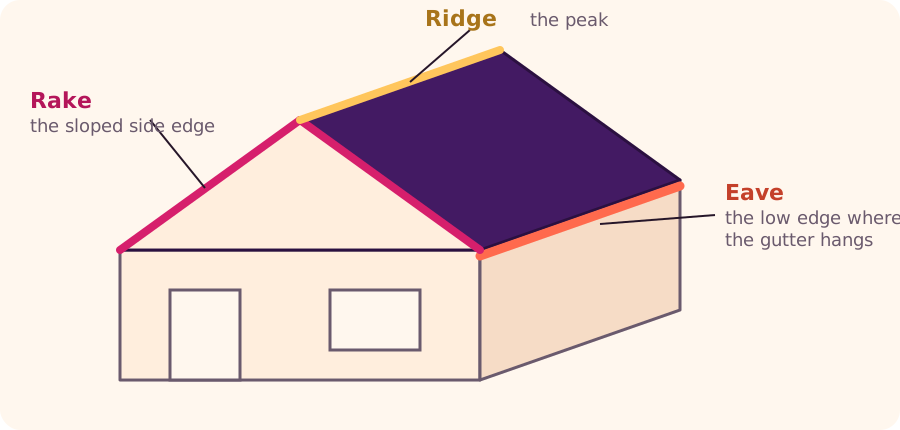
Eaves and rakes: two edges, two jobs
Your roof has two kinds of edges, and they are not the same.
- Eaves are the low edges along the bottom of the roof, where the gutters go. The piece of metal here is often called a gutter apron. It sits under the shingles and sends water into the gutter.
- Rakes are the sloped edges along the sides of a gable roof. There is no gutter here, and the metal keeps wind-driven rain from sneaking in at the edge.
In everyday talk, people call both of them drip edge, and that is fine. If someone says “gutter apron,” they mean the eave piece.
How it works with your gutters
A good gutter and good drip edge are a team. The gutter should tuck behind the drip edge or apron, with a little gap, so water running off the roof lands in the gutter instead of slipping behind it.
When the metal is missing, too short, or jammed tight against the fascia, water gets behind the gutter. You may see:
- Stained, peeling or soft fascia boards
- Water marks on the wall behind the gutter
- Gutters that look fine but still seem to “leak” at the back
- Ice forming behind the gutter in winter
Why many older homes do not have it
Older building codes did not require drip edge, so plenty of homes were built without it, especially older ones around Anchorage. Newer codes call for it at both the eaves and rakes. If your roof predates that, or a past re-roof skipped it, it may not be there.
Can you add it later?
Yes, and without tearing off the roof. This is called a retrofit. The metal is carefully fitted under the existing shingles, with small cuts around gutter hangers and spikes, and secured so it lies flat. The goal is to angle the edge down and away from the fascia so it does not cup the shingles.
One honest limit: drip edge cannot fix shingles that are already badly curled or cupped. It is protection going forward, not a repair for old damage.
How to check yours
From the ground, look along the edge of your roof for a thin metal lip peeking out below the shingles. If you do not see one, or you see staining on your fascia, take a few close-up photos of the roof edge and gutter.
Not sure what you are looking at? Request an estimate and send us your photos. We will tell you what we see and whether drip edge would help.
Ready for a clean slate?
Tell us about your home. We review it, then send a clear written estimate. No pressure, no surprises.